Showing posts with label 1970s. Show all posts

Tuesday, March 25, 2014

'Shalimar'

This is an odd choice for the list. It’s a soundtrack to a Hindi film in 1978 called Shalimar. It starred what appears to be some of the more popular Hindi film stars of the day in addition to Rex Harrison.

Harrison plays a dying crime lord who challenges the best thieves in all the land to steal a precious gem, Shalimar. S.S. Kumar plays a low-level thief, who through a series of misunderstandings and identity theft is adopted into the inner sanctum of the criminal underworld.

I haven’t seen the film, but I can only assume Kumar succeeds in either stealing the diamond and/or bringing down Harrison’s dastardly crime syndicate and getting the girl. There’s always a girl.

It’s not a Bollywood film as I’ve learned only refers to films produced in Bombay (now Mumbai, but once the “Hollywood” of Indian cinema, hence the name). The soundtrack, however, is unique as it is a multi-layered collection of 1970s kitsch, traditional Indian instrumentation with a healthy splash of Western music.


Otherwise, I can’t see much of a reason why this soundtrack is on the 1,001 list. Outside of being "ultra stereophonic." 

'Stand!' & 'There's a Riot Goin' On'

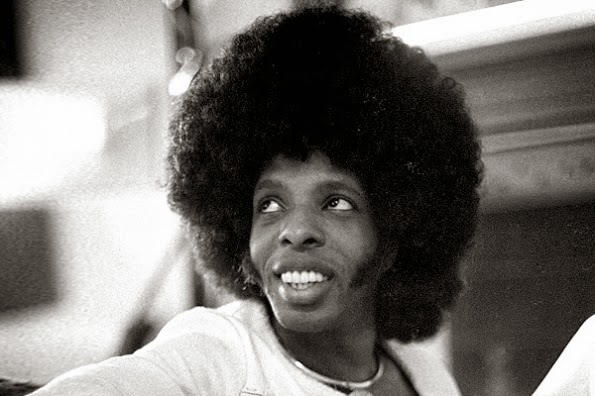
Culturally, it’s hard to find a musical artist that was on par with Sly and the Family Stone. The band encompassed the late 1960s and early 1970s like very few ever did.

There was the rock and hippie angle with socially conscious lyrics of both Stand! and There’s a Riot Goin’ On. Shortly after the success of Stand!, the band played Woodstock already making them a pillar of the cultural times.

Furthermore, with the song "Everyday People,"
they actually coined a phrase, “Different strokes for different folks.” How culturally impactful is that?

Their biggest impact is being virtually the first band of note to have a multi-ethnic and multi-gender band including Sly’s brother and sister, and two white guys, who the Black Panthers were later put pressure on Stone to replace with African American players.


After the success of Stand! the band really hit a rough patch, which in many ways was exacerbated by his rampant drug use. He would later end up broke and busted multiple times for drug possession (it’s rumored that he carried a violin case full of illicit drugs around). It resulted to ruin his career as it was always a gamble of him or a bandmate missing a show. He retired until recently when he’s gigged with family and friends. Otherwise, he’s been a recluse and rumored to be living in a van down by the river, quite literally. 

Monday, March 10, 2014

'#1 Record' & 'Third/Sister Lovers'

Big Star, a lesson to all artists. It’s fleeting and no matter what you have going for you it probably will never happen. If it does, it doesn’t last long.

Alex Chilton had the name. He was the lead singer of The Box Tops and had a hit record with “The Letter.” Then there was Chris Bell, the talented guitarist and lead singer. Two really legit songwriters and artists, one with a claim to fame. Furthermore, the band was based in Memphis along with the distribution power of Stax Records.

On top of all that, Big Star was a power pop band built around melodies and hooks. They weren’t anything out of left field with its foundation based in The Beatles and The Rolling Stones. Critics loved them.
Yet, their career probably peaked recently when a documentary about the group was released and interest in the band probably hit an all-time high.

What went wrong?

Stax Records couldn’t promote the band appropriately. This responsibility was eventually given to Columbia Records, who did not want to mess with small-label band so copies of the record couldn’t be found in the record stores.

Bell later quit the band as they continued recording and continued finding a dead end through distribution and marketing. He would die in a car accident at age 27.


So, before you declare a band as being eternal or some sort of pillar of the zeitgeist, remember that there’s thousands of better bands and artists that never got the chance. 

'Led Zeppelin I' & 'Led Zeppelin III'

Order of an individual’s favorite Led Zeppelin album, chronologically.

Everyone initially loves Led Zeppelin IV or ZOSO because of “Stairway to Heaven.”

Then they realize it was just an indulgent jack-off session so they start to like Led Zeppelin II because it has a lot of radio hits and by this time you’re an older teenager and it’s also a plodding mess of hard rock and early metal.

You age. And you adopt Led Zeppelin I as your favorite album because it’s “genuine” and “pure Zep” because it’s them doing blues, which is all Led Zeppelin really were. At this point, you’re a true asshole because you like a British band solely for ripping off poor, unknown black Americans, who did all these songs and did them nominally better.

You age a bit more and probably are reaching your mid-20s when you realize that Led Zeppelin IV (ZOSO) is, again, the best IN SPITE OF “Stairway to Heaven,” which remains a pretty overrated song.

After a multi-year respite and dalliance with Houses of the Holy and Physical Graffiti, you finally come to the conclusion that Led Zeppelin III is the best album because by this time you are 30+ and not a total retard. Although, in the back of your brain, you still think Physical Graffiti might still be better.

I just finished reading Hammer of the Gods, one of the most well-known of rock and roll biographies and although thoroughly entertained it didn’t take long for me to realize that Led Zeppelin were, in fact, total assholes. I mean, Jimmy Page’s opinions of women alone make you question their entire body of work and aesthetic. Women were basically third-class citizens to him.

John Bonham appears to be a total drunken lunatic. Peter Grant might have been one of the most unethical humans outside of genocidal totalitarians.

Robert Plant was no prince, but in comparison he comes off looking like a sweetheart.

It’s a revealing read to say the least. This was Jimmy Page’s band (I don’t think it ever became anything different outside of his heavy heroin addiction later in the band’s career). He was with The Yardbirds, they split and the record companies basically attempted to rebuild it with Page and some pieces including fellow session player John Paul Jones. They picked Plant and Bonham from the English hinterlands and took off.

It’s also noteworthy how American Led Zeppelin were. They didn’t cut their teeth on the British tours and clubs. They went to America almost immediately behind the name power of “The New Yardbirds” and Page. They toured excessively with an American stadium tour every year.


Knowing who these people were doesn’t necessarily change the way you enjoy their music. If you’re like me, you’re as tired of the 15 or so songs that they jam on classic rock stations as any bloc of songs in history. And it’s not like they’ve been overplayed, so to speak
; they’re just not very good. Zeppelin’s true brilliance comes with their lesser known songs. In fact, a good barometer to find these songs is finding out what songs guitar magazines put in their tablature sections. I ignored all those songs early in life and now they’re my favorites.

Thursday, January 16, 2014

'Pleasure Principle'

Stop and do this: Think about the top 20 most influential musical artists in history.

Write them down.

Disregard how good the artists were and consider only this question, "If this band/musician didn't exist, it would've set off an irretrievable set of events that would've changed pop culture forever." Meaning, without Band A a whole genre or Bands T, U, V, W, X, Y and Z don't exist.

Disregard, also, the first caveman to whistle or King David plucking his lyre. Also, try to disregard the influences of the influential. Do the Beatles exist without Carl Perkins, Little Richard, Buddy Holly and Chuck Berry? Probably not. But I don't think the Beatles' influence necessary should reflect on Little Richard, who was himself influenced by others.

Also, disregard most classical musicians. 

My list, in no order: The Beatles, The Ramones, Hank Williams Sr., The Clash, Metallica, The Rolling Stones, Beethoven, Run DMC, Tupac Shakur, Elvis Presley, James Brown, Black Sabbath, Jimi Hendrix, Madonna, Bob Dylan, Nirvana, Pink Floyd, Michael Jackson, Led Zeppelin and The Velvet Underground.

OK, expand your list to 25 and I dare you not to include Gary Numan. Before you laugh me off the Internet, consider that few were doing with synthesizers and electronic music in the 1970s quite like Numan. His influence would be notice immediately in the New Wave of the 1980s, but the influence I think reaches its apex among more edgey and artistic folks starting with Trent Reznor and Nine Inch Nails, DJs and dance and house music creators, hip-hop guys and even folks like Animal Collective and others that utilize almost exclusively electronic instruments.

Now, Numan wasn't alone. He was contemporaries of others like Kraftwerk, Can, Faust, the prog bands and Brian Eno. Numan didn't event anything nor what he probably the best, but he made it popular.

Again, Carl Perkins and Little Richard were never going to do what The Beatles were going to do.

Numan did make it popular with Pleasure Principle being his most popular album. Numan himself is not too different from his stage persona (if indeed you define it as a persona that is separate from his own personality). He's suspected of having some social disorder like Asperger's Syndrome. He's been medicated for depression before. His distant and stoic self that's on the stage is little different than that persona at home. He's a dude that doesn't like other people. A true artist.

By the way, listen to "Random" from this album and tell me it could be re-released next week.


Tuesday, January 14, 2014

'Tea For The Tillerman'

If you're not listening to Tea for the Tillerman on a regular basis then you must be an idiot. It's necessary listening.

The A side of the record is as good of a side of recorded music then you'll find in the medium's existence. "Wild World," "Hard Headed Woman," "Where Do the Children Play?" and "Sad Lisa." Just enough blissful heartache to keep you going.

The album was released in 1970 just on the heels of Cat Stevens nearly dying after contracting tuberculosis, which precipitated him discovering religion, practicing yoga and becoming a vegetarian. We can only assume that the experience eventually resulted in him converting to Islam years later.

Fun fact: He adopted "Cat Stevens" as a stage name due to a laborious real name and because he thought people liked animals. Singer, songwriter, marketing genius.

Monday, January 13, 2014

'Third'

If you were a hardcore subscriber to Guitar magazine like I was, and you wondered why Allan Holdsworth kept getting mentioned, then Soft Machine is your answer.

He played guitar for this prog-rock group at two different times, although, coincidentally, not during the recording of Softs.

Not going to blow my prog-rock load right here because I've got a lot more to go. However, it is worth mentioning that Soft Machine had 20 different line-ups over an 18-year period of synthesizing your nuts off.

I don't know if Holdsworth is in the photo above, but I'd like to think he's the weirdo on the far left.

Friday, January 10, 2014

'Q: Are We Not Men? We Are Devo!'

I can't get over that the guy on the album cover looks like NFL quarterback and three-time Super Bowl champion Tom Brady.


There's not really a photo on the Internet of Tom Brady in that style of hat, at least without sunglasses. there are photos of Tom Brady crying and I don't know why he's crying. It's depressing that he'd be so sad about something.

Also, Brady's been on a lot of magazine covers and he's had lots of hairstyles. Yet, I don't know what he even sounds like. Is that weird?

Why am I talking about Tom Brady? What's happening!?

Oh, GOD, Gisele Bundchen!

Eh, he also looks like Benedict Cumberbatch.

Tuesday, January 7, 2014

'My Aim Is True'

Elvis Costello's debut album after six years on the club and pub tour.

He kept working at his day job even after the release of "Less Than Zero" and "Alison" as singles. The record company eventually offered to pay him his wages plus a bonus, an amplifier and a tape recorder.

So decadent.


Friday, December 20, 2013

'Darkness On The Edge Of Town'

I like Bruce Springsteen and all, but if I have one complaint (one that prevents me from being an overly genuine fan) is that Springsteen has created a persona that's really not unlike anything David Bowie or Lady Gaga have done.

And it's not necessarily to question the authenticity of Springsteen's personal background and how the themes of his songs pertaining to "hanging tough," the plight of the worker and being a sad pap are not important to him.

But it does feel like some kind of image was molded and that has the glaze of disingenuousness. If that's a word.

A terrific album nonetheless.

Monday, December 9, 2013

'What's Going On' & 'Let's Get It On' & 'Here My Dear'

No one could do what Marvin Gaye could do. Now or then.

I beg you to do a Google search for his isolated vocal track for "I Heard It Through The Grapevine." Effortless and perfect.

I think he's probably the best soul vocalist in the genre's short history and I can't really imagine anyone being as good as Gaye was. It makes even more tragic that Gaye wound up with a heavy cocaine problem, money issues and his inexplicable death at the hands of his father.

I think What's Going On and Let's Get It On are the superior albums, but all three characterize Gaye in a lot of ways. After an extremely successful debut in the Motown world including a bevy of duet hits, he recorded the socially conscious What's Going On inspired by Obie Benson (of the Four Tops) witnessing police violence during a war protest in Berkeley.

Berry Gordy refused to release it. Gaye went on strike until it was. And it was in 1971 and went No. 1.

Two years later Gaye recorded and released Let's Get It On (I've always wondered if he intended these albums to be companion pieces because of the use of "on" as a sort of "make love not war" thing). In a lot of ways it's the complete opposite of What's Going On because it's just full of sexual, carnal energy.

Here My Dear is my least favorite of these three 1970s albums from Gaye. It's dour and sad. It is inspired by his divorce from his wife.  In seven years, Gaye managed to run the gamut of emotions from the heartbreak to sheer elation.

Tuesday, December 3, 2013

'Harvest'

 Harvest put Neil Young on the map probably despite his best efforts. Although I truly feel sorry for public figures that put their privacy on the line in exchange for sharing their talents, it’s hard to understand Young playing in Buffalo Springfield, Crosby, Stills and Nash and then releasing three relatively popular solo albums and not expecting some recognition.

Young was taken aback at the popularity that Harvest brought. It topped the Billboard 200 for two weeks. I guess since it’s impossible for me to have it both ways, I don’t comprehend someone else having it both ways.

Harvest came to fruition after Young appeared on The Johnny Cash Show (a show that concerned itself little with what was popular, but instead what Johnny Cash wanted to do inviting all sorts of country and folk acts), which also featured Linda Ronstadt and James Taylor. Afterwards, Young invited the duo to his barn studio to record.

Although probably his most popular album, I care little for Harvest. I think his hits – “Heart of Gold” and “Old Man” – are some of his most boring songs.


'Phaedra' & 'Leftism'

I was set to present these two albums (neither are which are bad, by any means) only because they reminded me of each other only because they're both electronic music with sparse lyrics.

The two are actually very, very different (although I bet Leftfield played the hell out of Phaedra when they were growing up).

Phaedra from Tangerine Dream is a sequencer-driven prog album from the 1970s and, most notably, from Germany. I mean, who was doing weirder shit than the art-school Germans in the 1970s? No one, that's who.

Imagine Pink Floyd if they dumped all of the guitars, drums and bass ... and songs lasted 10 minutes a piece.

Leftism is 1990s British trip-hop. And it's very good. If you're the type to throw a party you probably would not go wrong with this album.

Two different albums, but both are brilliant examples of two important sub-genres of recorded music.


'Never Mind The Bollocks Here's The Sex Pistols'


I think it is funny when “punks” make a really clean, melodic rock album. What’s less anarchic than recording an album for Virgin? 

Interestingly, Sid Vicious (the noted drug addict, who sometimes played bass guitar) is featured just on one song on the Sex Pistols’ only record. Former bassist Glen Matlock was asked to return, but once he wasn’t paid he laid down only one song. Guitarist Steve Jones played bass on every other track.

Say what you will about the vapid modern entertainment culture, but Vicious is a well-known “rock god” for basically dying. He’s famous for nothing.

Wednesday, November 27, 2013

'Cut'

I'd never heard The Slits before this and you can color me green with envy for anyone who'd been listening to them since the 1970s. This is a tremendously cool record. Nothing fancy, just some rocksteady ska rhythms mixed with a robust slate of bass lines.

This is a must-listen for anyone interested in early punk.

Lead singer Ariane Foster (or Ari Up) was at the ground floor of it all. She was the god daughter of Jon Anderson from Yes. She also wound up married to hot head John Lydon, lead singer of The Sex Pistols. Their house became a hovel for the young punk bands including Joe Strummer, who's own music is a direct cousin to The Slits.

The Slits were an all-female group. It's worth noting I think that the album cover to Cut was the band nude and caked in mud.

Saturday, November 9, 2013

'The Eagles'

The Eagles might be one of the few (if not the only) band in recorded music history to have all its best songs be, also, it's greatest hits.

I do think the Eagles get slotted pretty unfairly as a boring 1970s rock band when in fact they were a California country band with obvious rock leanings. They were nearly a niche band if they didn't write really good radio songs that became insanely popular. That's not their fault that they can write a good song. We praise Lennon and McCartney for doing this.

Fact is, "Take It Easy" and "Peaceful Easy Feeling" are fantastic songs from the music, lyrics to the ability to scream sing all the lyrics in the car.

There's nothing wrong with the Eagles.

It is worth noting that Glen Frey co-wrote "Take It Easy" with then-neighbor Jackson Browne, who actually wrote about 90 percent of the song with Frey adding "It's a girl, my Lord, in a flatbed Ford" which sounds like a measly contribution to such a huge hit until you come to understand just what an awesome lyric that actually is. Sorta makes the song.

Tuesday, August 20, 2013

'Electric Warrior' & 'The Slider'


The origins of T. Rex date back to August 1967 when then acoustic performer Marc Bolan booked a gig at Electric Garden. He had no band. 

So he takes out an ad in the local newspaper, holds auditions at 3 p.m. and is ready for the gig at 5 p.m. He and his band were booed off the stage and they broke up.

Bolan did keep a drummer/percussionist, who had changed his name to a hobbit from The Lord of the Rings trilogy (Steve Peregrin Took), and they continued to gig until they went electric and formed what is known as T. Rex, a sort of boogie/glam/1970s panty-dropping radio music for reformed hippies.
 
Of these two albums, Electric Warrior was released first and became the band’s biggest hit in England and The Slider became the band’s biggest album in the United States. It also evoked an hour conversation from an older co-worker, who is REALLY INTO T. REX.

Bolan died in a car accident in 1977. Ironically, he never learned to drive due to a fear of premature death.

Steve Peregrin Took was killed by an orc.

Friday, July 26, 2013

'Space Ritual'


Hawkwind still plays. In fact, in their 44th year, they’re touring and actually playing in my city in the next couple of weeks. 

This makes Hawkwind weird. Why? Because A vast, vast majority of bands do not exist at age 44. And a vast, vast, vast number of those bands aren’t as relentlessly unpopular as Hawkwind.

Now, popularity is sorta bullshit because no one is necessarily to blame for unpopularity. Maybe there’s a cause, but if a band is OK with being unpopular than there’s nothing wrong with that.

Hawkwind is a remnant of the late-1960s early metal, prog- and hard rock scene especially anything coming from the United Kingdom from Black Sabbath to Deep Purple.

The one constant, and the only thing keeping it together is Dave Brook, the guitar player and vocalist who has been with the band for all 44 years.

As you might imagine, being around that long, you run through a number of bandmates. What makes Hawkwind unique is just how utterly unexceptional the 50+ former members of Hawkwind are. Included is one Lemmy Kilmister, the legendary bass player for Motörhead, who was roadie for them until joining in 1972 and quitting in 1975. The other notable member is Ginger Baker, who gigged with them in 1980.

Otherwise, it’s about 50 dudes so unspectacular that it’s amazing not to have had more success, all things considered.